
A churning customer rarely announces it. They stop replying as fast. They miss a check-in. They use the product less. Then the renewal date arrives and they are gone. You find out the relationship ended months before you noticed.
That gap is expensive. A lost renewal is a customer you already paid to acquire, now gone, and you start the replacement from scratch. The signals were there. Nobody was watching them. When churn shows up at renewal, the cost is the full replacement cost of that account, plus the expansion revenue you will never earn from it.
A churning customer goes quiet first
Most B2B churn is quiet. The customer does not complain. They do not call to cancel. They disengage. Logins drop. Emails go unanswered. The main contact leaves and nobody picks up the relationship. Silence is the signal, and silence is easy to miss because nothing lands in your inbox demanding attention.
A customer who has not heard from you in three months has no reason to stay when a competitor calls. By the time the renewal conversation starts, the decision is already made.
The signals you can watch
You can see a churning customer before they cancel if you decide what to watch and watch it on a schedule. The signals are usually already in your data:
- Usage dropping month over month
- Support tickets rising, or going silent after a bad experience
- A key contact leaving with no replacement engaged
- Slower responses, missed meetings, shorter calls
- An invoice dispute that never fully resolved
None of these are new information. The problem is that nobody owns watching them, so they sit in separate systems until the contract lapses.
What it costs to keep watching nothing
Put numbers on it. Take a B2B firm that loses customers it never saw slipping. Assume an early warning system flags 20 at-risk accounts a quarter and the team saves 12 of them at €25K each. That is €300K of revenue protected a year, against a fix that costs a fraction of that. The numbers are illustrative; your baseline gets set from your own data.
Quiet churn carries the same math. Assume 300 customers at €20K average and quiet churn running at 8%. Cut it to 5% and you protect €180K a year. The work is not heroic. It is a designed rhythm of contact and a system that flags the accounts going dark.
What to build instead
Reduce a churning customer to a process, not a surprise. Three pieces do most of the work:
- Decide the signals. Pick the five or six that actually predict a customer leaving in your business: usage, contact engagement, support pattern, stakeholder change.
- Watch them on a cadence. Someone owns the list. The signals get reviewed weekly or monthly, not pulled in a panic at renewal.
- Build the recovery experience. When a signal trips, there is a designed response: who reaches out, how fast, what they say, what they offer. Not an improvised email.
Add a communication rhythm between the big moments so customers do not go quiet in the first place: check-ins, value updates, a reason to stay engaged that is not a renewal invoice.
What to do next
Map the route from signed contract to renewal and mark every point where a customer could go quiet without anyone noticing. If the honest answer at most of those points is "nobody is watching," that is the gap costing you renewals.
That map is step one. The next step is building the early warning system and the recovery experience, then proving the save rate moved. Find the problem, build the fix, stay until the metric moves.
Frequently asked questions
What is a churning customer?
How do you identify customers at risk of churning?
Why do B2B customers churn without warning?
How much does customer churn cost?
Can you reduce churn after a customer has gone quiet?
More on Retention
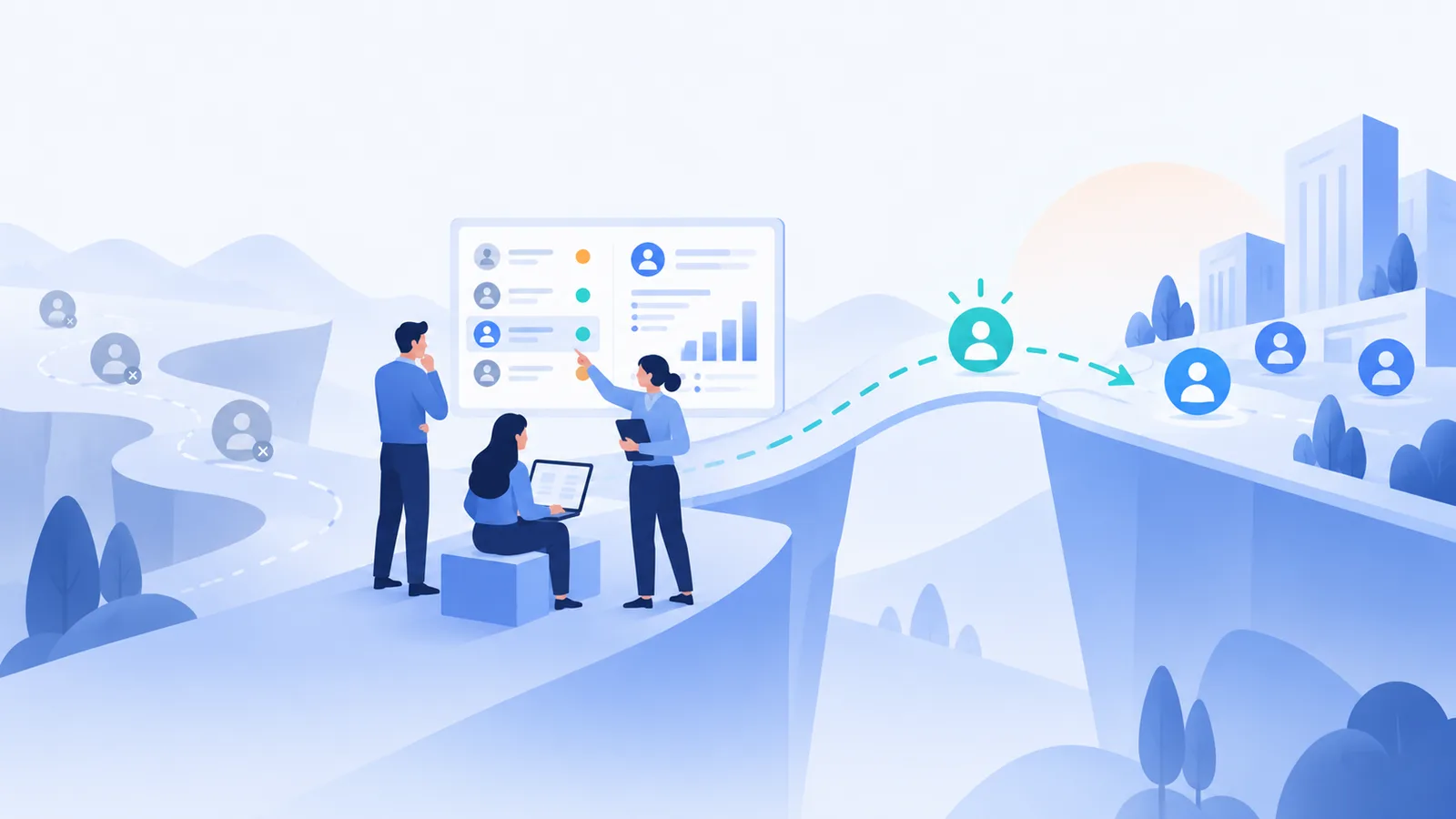
How to Win Back Lost B2B Customers
Winning back lost B2B customers is account recovery, not a discount email. How to choose which to pursue, find why they left, and win them back.

Customer Churn Prevention: How to Stop Churn Before Renewal
Churn prevention is not a save-desk at renewal. It is upstream work: get accounts to value fast, watch the signals, and fix the cause. Here is how, for B2B.
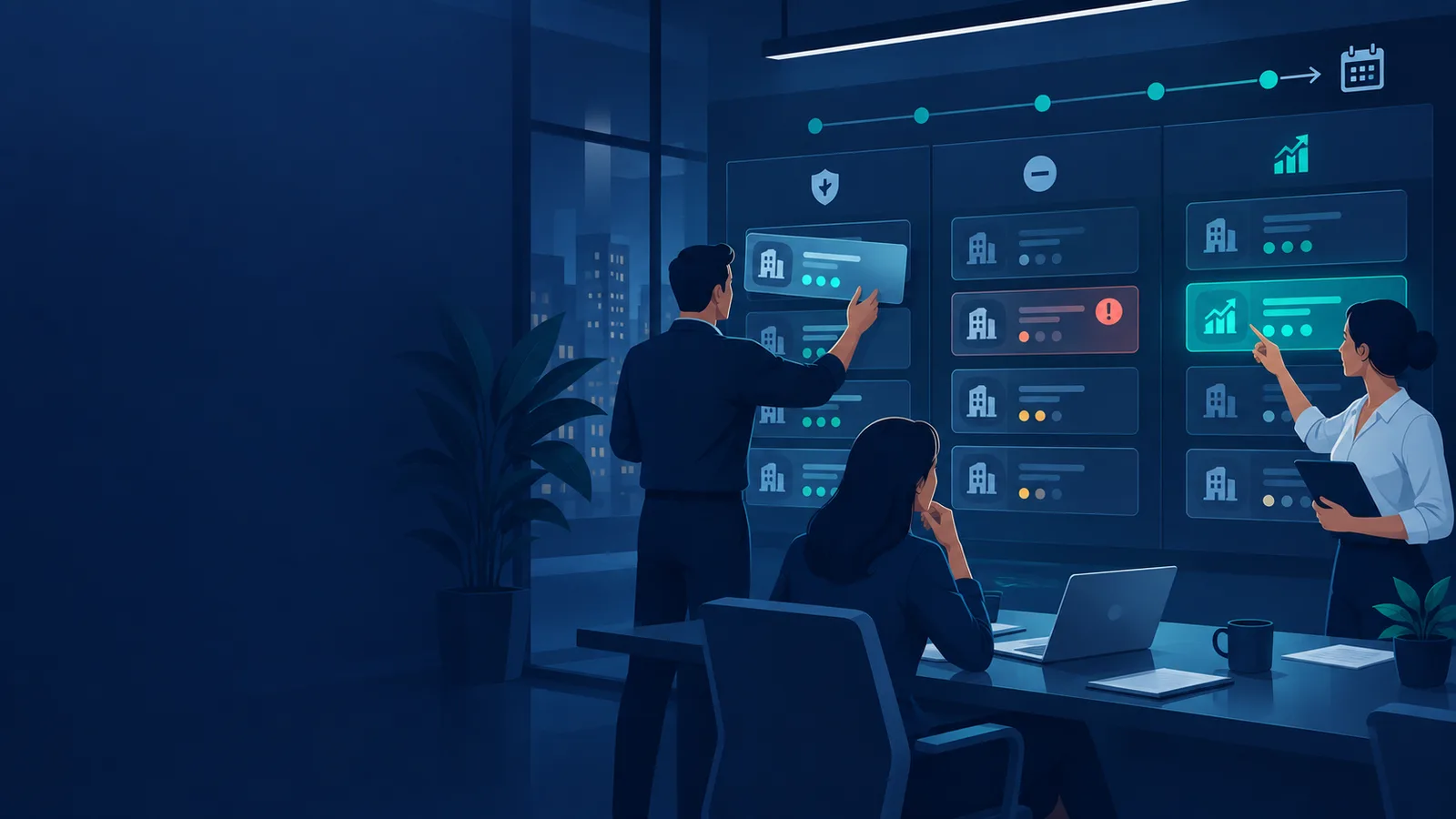
Customer Retention Strategy: How to Build One for B2B
Most B2B companies have retention tactics, not a strategy. Here is how to build a customer retention strategy that runs as one system and protects revenue.