
A customer signs. Sales moves on to the next deal. The account uses the product less each month, raises a few support tickets, then goes quiet. You find out it is gone when the renewal does not close. By then the decision was made weeks or months ago, and you had no idea.
This is the most expensive kind of churn, because it is the kind you never saw coming. Every B2B account lost without warning costs you the full price of replacing it: the acquisition spend you already paid to win it, plus the cost of winning a new account just to stand still. The revenue was already yours. You lost it while the signals were sitting in your own systems.
Churn is the last event, not the first signal
Churn is a lagging number. It tells you what already happened. The renewal date does not decide whether a customer stays; it only reports a decision the customer made earlier, when the experience stopped delivering what they bought.
That gap is the opportunity. If the decision forms before the contract ends, the signals form before it too. The question is not "how do we reduce churn." It is "what tells us an account is leaving while we can still do something about it."
Gartner's Ignition Guide to Creating a B2B Customer Retention Strategy (Gartner, 2024) makes the same point: retention teams need to surface at-risk accounts on usage, engagement, and satisfaction signals and step in before renewal, rather than waiting for the renewal conversation to reveal the problem.
The warning signs sit in the experience, not the forecast
The signals are rarely in the renewal forecast. They are in how the customer behaves after the sale. The common ones:
- Usage drops or flattens. The account logs in less, uses fewer features, or stops reaching the outcome it bought.
- Support contact changes. Either it spikes, because something is not working, or it stops, because the customer has given up asking.
- Stakeholders go quiet. Emails that used to get a same-day reply now sit for a week. Your main contact stops showing up to calls.
- The account goes silent. Months pass with no meaningful contact in either direction.
- Renewal questions arrive late. Procurement appears at the last minute instead of the sponsor engaging early.
Any one of these on its own is noise. Together, over a few weeks, they are a pattern. A customer who has stopped using the product, stopped replying, and stopped raising issues has usually already decided. The renewal is a formality.
Why nobody catches them, and what it costs
Most companies miss these signals for one reason: nobody owns the post-sale experience. Sales owns the deal until it closes. Support owns tickets. Finance owns the invoice. Each team sees one slice of the account and none of them sees the whole picture forming.
So the usage drop sits in the product data, the slow replies sit in someone's inbox, and the rising tickets sit in the support queue. The signals exist. They are just never read together by anyone whose job is to act on them. The account goes quiet, and quiet reads as fine right up until it is gone.
Size the cost from your own numbers. Take ten accounts lost last year at an average contract value of €40,000. That is €400,000 in recurring revenue gone. Add a €12,000 acquisition cost per account and you have written off another €120,000. Replacing them costs the same €12,000 again per new account just to stand still. The numbers are illustrative; your baseline gets set from your own data. Bain & Company found a 5-point lift in retention can raise profit by 25 to 95 percent, because retained customers cost less to serve over time and buy more.
What an early warning system actually does
Catching churn early is not a tool you buy. It is a designed part of how you run the account after the sale. Four things have to be in place:
- Decide the signals that matter for your business, named and agreed. Usage, engagement, support pattern, stakeholder contact, whatever predicts a loss in your accounts.
- Watch them together, so a pattern across signals triggers attention, not a single metric in isolation.
- Respond through a named owner with the time and authority to act, and a recovery play designed in advance so the team is not improvising under pressure.
Built into the operating rhythm, this turns silent losses into accounts you can still save. The metrics that prove it are working are concrete: how many at-risk accounts you identify, how many you save, and how fast you move from the first signal to the first action.
What to do next
Pull your churned accounts from the last twelve months. For each one, look back: was the account using the product less before it left? Did replies slow down? Did support contact change? If the signals were there and nobody acted, you have found the gap costing you renewals.
That review is step one. The next step is building the system that watches those signals and responds before the account is gone. Find the problem, build the fix, stay until the save rate moves.
Frequently asked questions
What are the warning signs that a B2B customer is about to churn?
Why do we only find out a customer is leaving at renewal?
How early can you catch an at-risk account?
Is reducing churn worth the investment?
Do we need software to spot at-risk customers?
More on Retention
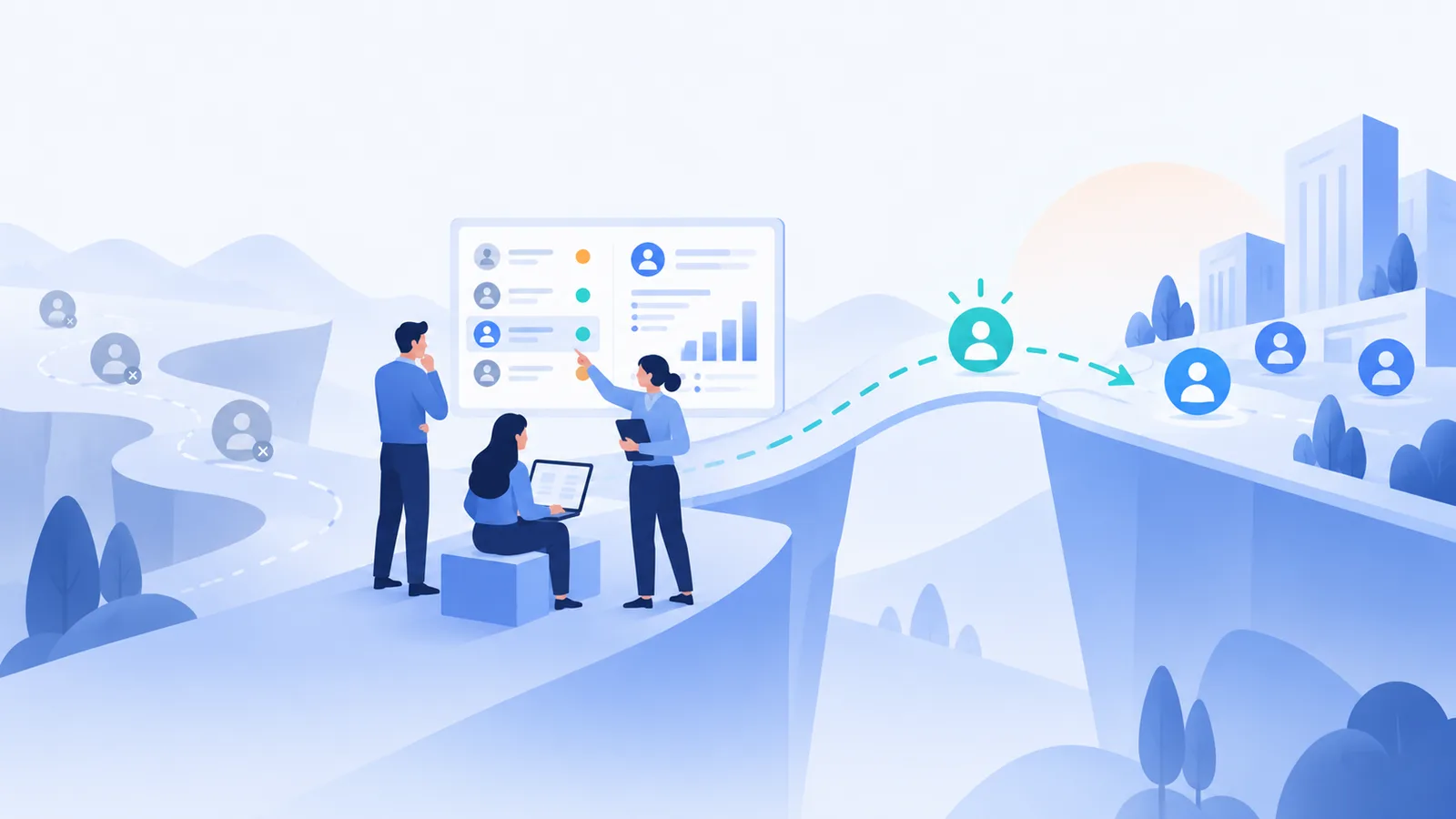
How to Win Back Lost B2B Customers
Winning back lost B2B customers is account recovery, not a discount email. How to choose which to pursue, find why they left, and win them back.

Customer Churn Prevention: How to Stop Churn Before Renewal
Churn prevention is not a save-desk at renewal. It is upstream work: get accounts to value fast, watch the signals, and fix the cause. Here is how, for B2B.
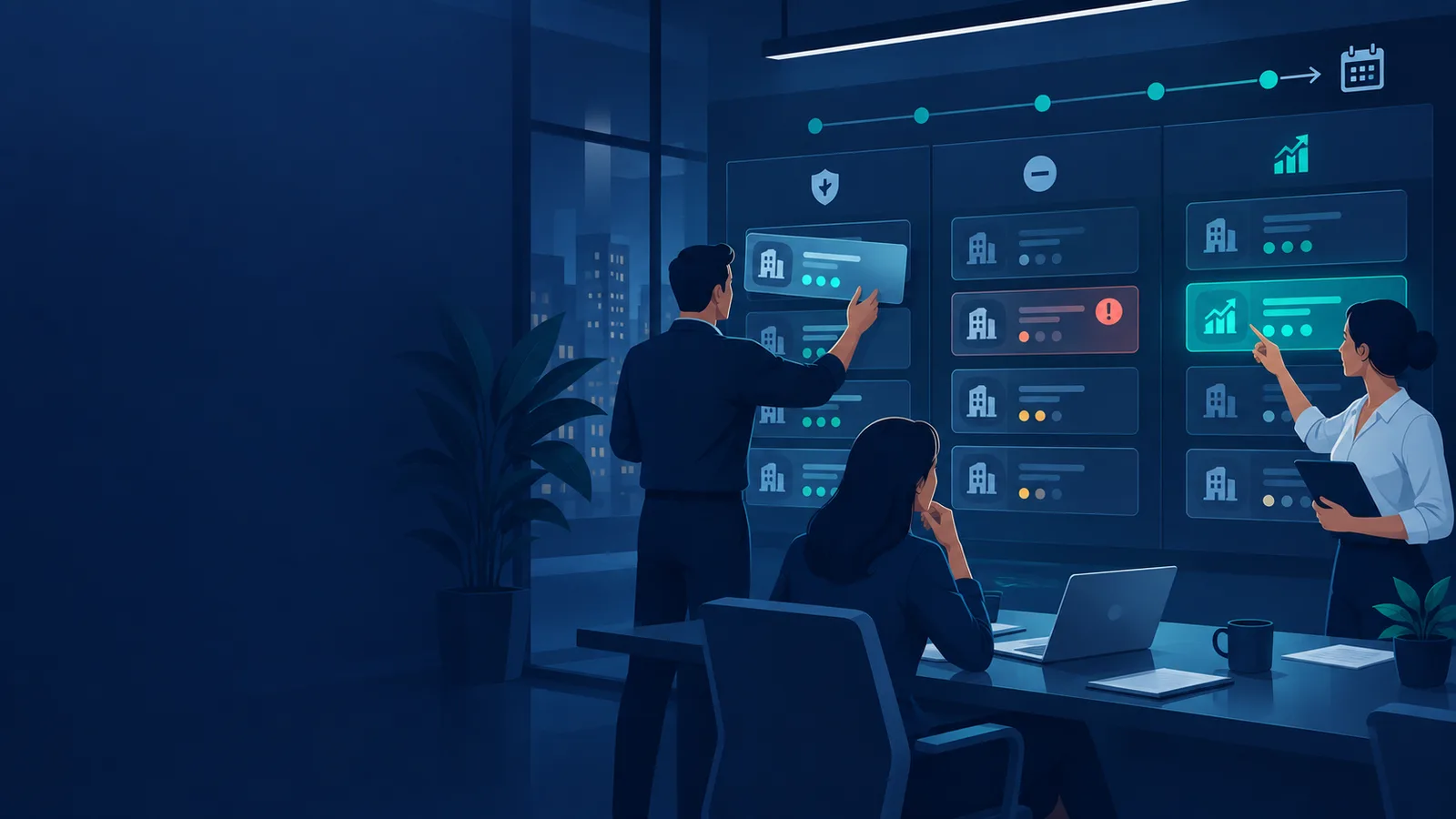
Customer Retention Strategy: How to Build One for B2B
Most B2B companies have retention tactics, not a strategy. Here is how to build a customer retention strategy that runs as one system and protects revenue.