
You have a commercial problem after the sale. Customers churn without warning, support costs too much, renewals are slipping, and nobody in-house owns the fix. So you start looking for a customer experience consultant. The real question is what kind to hire, because most will hand you a report and leave, and a report does not change the number.
A customer experience consultant is worth hiring only if the engagement ends in a fixed problem and a financial result you can point to. Here is how to tell one kind from the other, and how to choose for a B2B company.
What a customer experience consultant does
A customer experience consultant helps a company improve the experience its customers have, usually after the sale, so they stay longer, cost less to serve, and buy more. In B2B that means the post-sale experience: onboarding, support, communication, renewal, and expansion. The work is to find where that experience is losing you money, design the fix, and put a number on the result.
The distinction that matters: some consultants stop at the diagnosis. They assess, benchmark, and recommend, then hand you a report. Others design, build, and implement the fix, and prove it worked. Only the second kind changes your retention, your cost to serve, or your revenue.
When to hire one
Hire a customer experience consultant when three things are true: you have a commercial problem after the sale you can describe in money, churn, cost to serve, weak renewals, or stalled expansion; you do not have an in-house CX function that can fix it; and you want the problem solved, not studied. If you only want a report, you will get one, and the problem will still be there.
Advisory firm, or a firm that builds
The biggest choice is not which consultant, it is which kind. A large consultancy brings brand and a big team, but it is expensive, slower, and often staffed by junior people once the deal is signed. A freelance adviser is cheaper but usually advisory-only and cannot execute. A boutique CX firm sits between the two: a senior operator on your actual problem, fast, and able to build the fix rather than only recommend it.
For most B2B companies with a specific post-sale problem, the boutique firm that builds is the right answer. You get seniority and execution without the headcount or the consultancy bill.
What to ask before you hire
Three questions separate a consultant who will fix your problem from one who will describe it:
Do you build the fix, or only advise? If they only advise, you are buying a report.
Do you guarantee the result? A firm confident in its work will keep going until the metric moves.
What will this cost, and what do I get for it? A clear price against a clear outcome, not an open-ended engagement.
The answers tell you quickly whether you are hiring a fix or a slide deck. For the full buyer's guide to the process, see how to hire customer experience consulting that works.
How ExperienSync works
ExperienSync is a boutique B2B customer experience firm. We find where your post-sale experience is losing money, build the fix, and prove the financial result in retention, cost to serve, and expansion. We do not hand you a report and leave.
Every engagement starts with a diagnostic that ends in a ranked, costed action plan. The build that follows is guaranteed: we keep working until the metric moves. If you are looking to hire a customer experience consultant for a B2B company, that is the work we do. See how we work and what we solve, or book a call.
Frequently asked questions
What does a customer experience consultant do?
When should a B2B company hire a customer experience consultant?
What is the difference between a boutique CX firm and a large consultancy?
How much does it cost to hire a customer experience consultant?
More on Strategy

Will AI Replace Your Customer Experience Team?
No. In B2B, AI takes the routine work and moves your team to design, complex accounts, and overseeing AI. Here is what changes, and why a designed experience matters more.
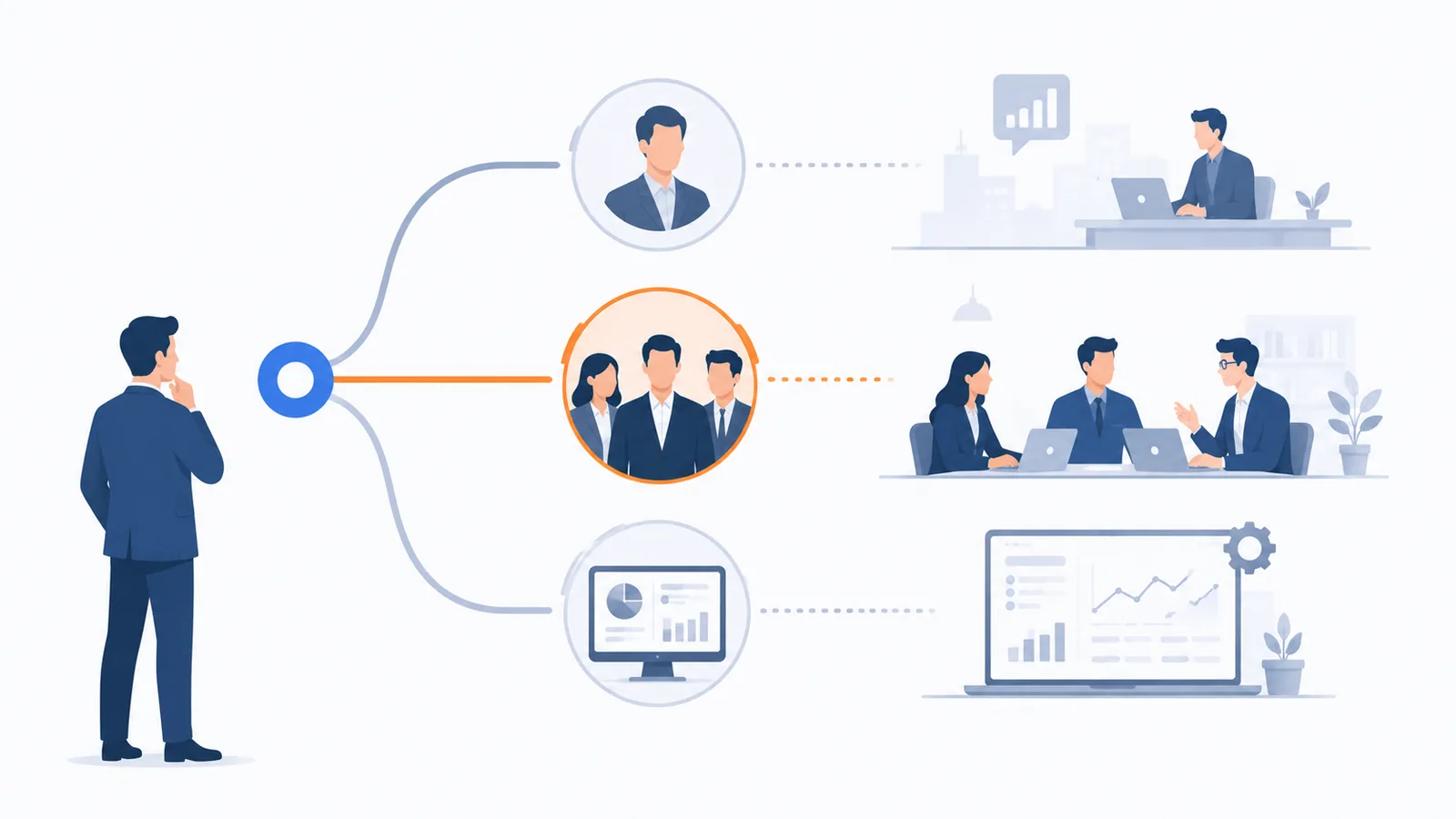
Do You Need a Customer Experience Consultant or an In-House Team?
Hire a customer experience consultant, build in-house, or buy software? The answer depends on speed, expertise, and whether CX is permanent. Here is how to decide.
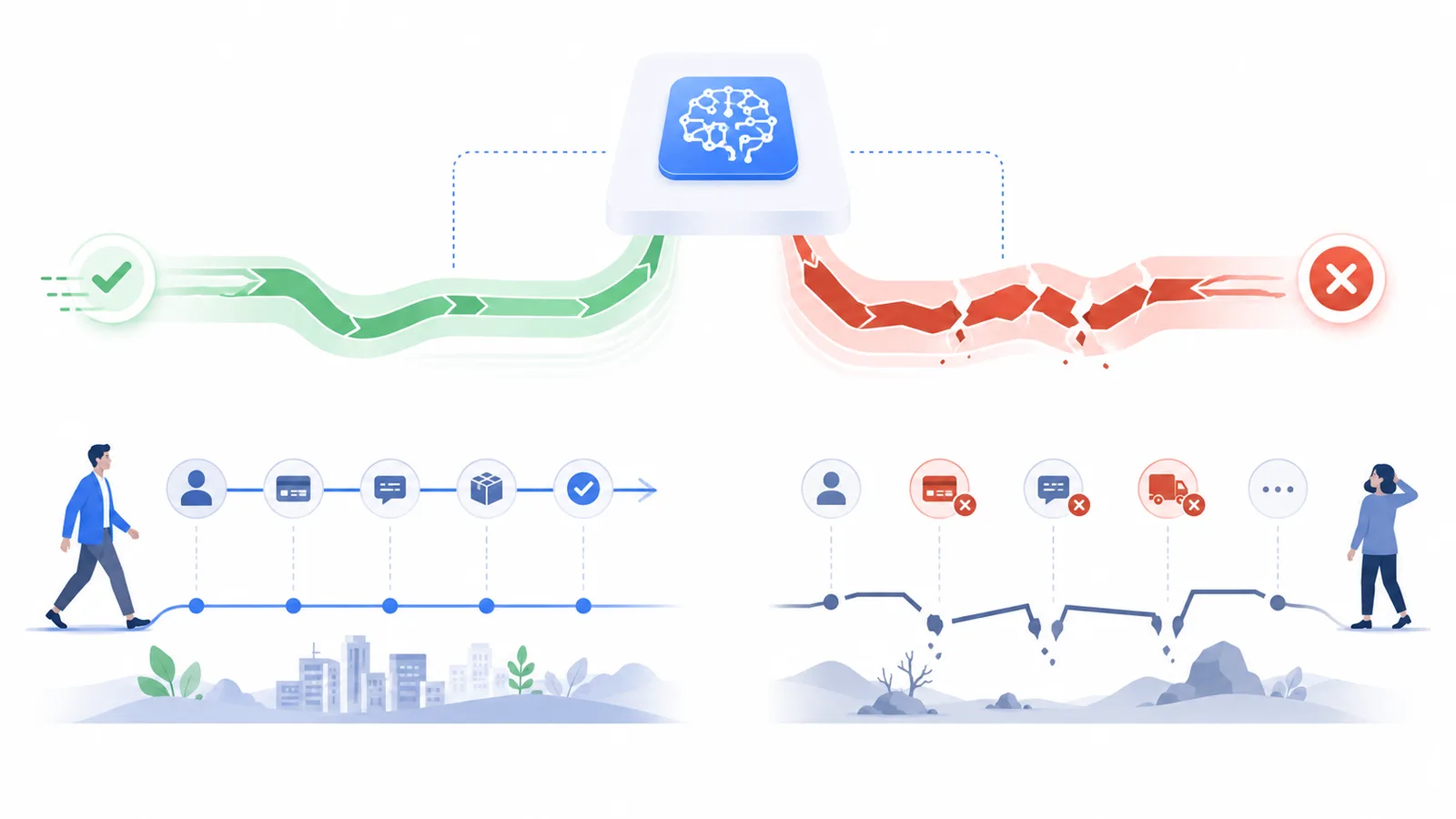
Does AI Improve Customer Experience? Only If You Fix It First
AI can improve B2B customer experience, but only on an experience that works. On a broken one it makes bad service faster. Here is what to fix before you automate.