
The cheapest revenue you can win is sitting in the accounts you already have. You have already paid to win them, you know their business, and you have a record of whether you delivered. Growing an existing account costs a fraction of winning a new one, because the relationship and the proof already exist. Yet most companies pour their effort into new logos and leave expansion to chance, capturing it only when a customer happens to ask.
That is revenue left on the table, and a lower ceiling on every account you hold. But expansion is also the easiest thing to get wrong, because the obvious move, pushing more product at the customer, backfires. Customer expansion done as a sales campaign erodes the trust you spent a year building. Done properly, it is earned: you grow the account because you delivered, and the customer wants more of a thing that is working. Here is how to run it.
Expansion is earned, not pushed
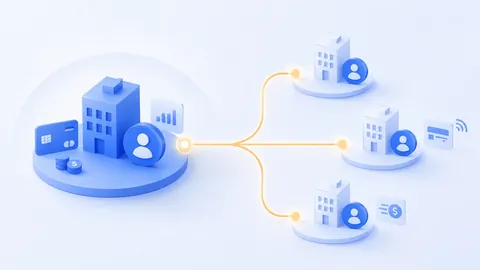
The reliable way to grow a B2B account is the land-and-expand motion: win a focused first piece of work, prove real value, then grow from there into more use, more teams, and adjacent needs. The order matters. Expansion is the reward for a working experience, not a motion you bolt on top of one. When you have delivered a result the customer can point to, expanding is a short conversation. When you have not, no amount of selling makes it land.
So the first rule of expansion is unglamorous: deliver the thing you already sold, and prove it. That is what earns the right to sell more.
Expand when value is proven, not before
Timing decides whether expansion builds trust or spends it. The moment to expand an account is after it has reached the outcome it bought, when the value is visible and the customer is getting what they paid for. Push more product onto an account that is still stuck in setup, or one whose first purchase has not paid off, and you confirm their worst fear: that you are there to sell, not to deliver. Wait until the account has a win, tie the next step to that win, and the expansion feels like progress rather than pressure.
Expansion is a retention signal, not a separate motion
Treat expansion and retention as the same job, because they are. An account that is using more of what it bought, spreading it to more of its teams, and leaning on you for more of its work is an account that is staying. The usage that signals a healthy, low-churn account is the same usage that opens an expansion. So the work that grows an account and the work that keeps it are not two programmes competing for attention. They are one motion: deliver value, prove it, and the account both renews and grows.
Three ways to grow an account
Expansion in B2B comes in three shapes. Watch for all three.
- More of the same: the account needs more of what it already buys, more seats, more volume, more capacity, as it uses you more.
- Adjacent needs: the account has a related problem you can also solve, so you grow by covering more of their work, not by discounting.
- New teams and departments: the value proven in one part of the business is relevant to another. This means bringing in new stakeholders, so expansion often starts by widening the relationship beyond your original champion.
Give expansion an owner
Expansion signals are quiet. An account quietly maxing out its usage, a champion mentioning a new project, a second team asking for access, none of these announce themselves, and none get acted on if nobody owns them. Give someone the job of watching each account for those signals and making the case at the right moment, and connect it to the delivery side so the expansion is grounded in a proven result. Leaving expansion to surface on its own, or saving it for the renewal conversation, is how it gets missed.
What to do next
Take your ten largest accounts and, for each, mark two things: has it reached the value it bought, and what is the next problem you could credibly solve for it. The accounts that have a proven win and an obvious next need are your expansion pipeline, and it is cheaper to work than any new-logo list you own.
Delivering the value that earns expansion, and building the post-sale experience that both keeps and grows accounts, is the work we do at ExperienSync. We find where the post-sale experience loses money, build the fix, and prove the financial result. See what we solve and how we work, or book a call. For the measure of how much of an account you hold, see share of wallet in B2B; for the longer-term value it builds, see how to increase customer lifetime value.
Frequently asked questions
What is customer expansion?
When should you try to expand a B2B account?
How do you upsell or cross-sell without pressuring the customer?
Is customer expansion a sales job or a customer success job?
Why is expanding an existing account cheaper than winning a new customer?
More on Growth

Share of Wallet: How to Grow It With Your B2B Customers
Share of wallet is how much of a customer's category spend comes to you, not a competitor. Here is how to see yours in B2B and grow it through the experience.
How to Get B2B Referrals From Customers You Already Have
In B2B, referrals are earned, not bought with a reward or a tool. Here is how to turn a well-served customer into referred pipeline and account growth.